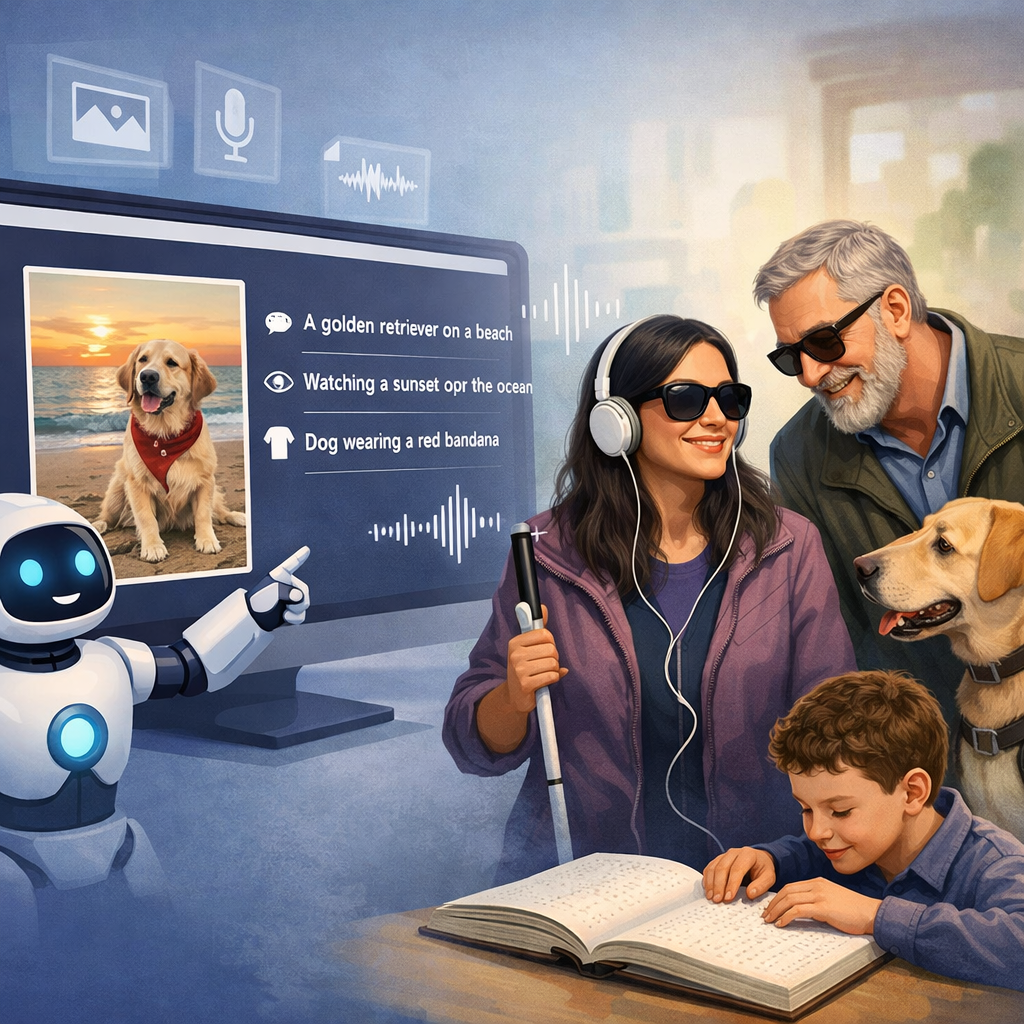
AI image description tools can save time and improve access to visual content, but the quality of the result still depends on how the tool is used and reviewed. A good description helps someone understand what is visible in an image without adding confusion, bias, or unnecessary detail. A weak description can miss the main subject, overstate uncertain details, or focus on the wrong part of the scene. For a website like describeimageai.com, it is useful to cover not only the benefits of AI image descriptions, but also the common mistakes that reduce clarity and usefulness. Understanding these problems can help users get more accurate results for accessibility, SEO, content review, and general image understanding.
Why mistakes happen
Many errors in AI image descriptions are not caused by one single issue. They often come from a mix of image quality, context, prompt quality, and user expectations. If an image is blurry, dark, cropped, or visually complex, an AI system may struggle to identify important details with confidence. If the request is too vague, the output may become generic and fail to mention what matters most. Some users also expect the AI to know context that is not actually visible in the image, such as names, events, locations, or emotions with certainty. When expectations are not realistic, the description may seem incorrect even if the system is only reporting what it can infer from the visible content.

One of the most common mistakes is accepting the first description without checking whether it matches the purpose of the task. A description written for alt text should be concise and focused on the essential visual information. A description for product content may need more detail about color, shape, materials, and background. A description for internal review may need to mention layout, text in the image, or object placement. If users do not define the goal, they may end up with an output that is technically correct but practically unhelpful. Another frequent issue is including too much filler language, such as saying an image is “beautiful” or “interesting” instead of describing what is actually there.
Errors that reduce clarity
Descriptions often become less useful when they contain assumptions rather than observations. For example, an AI might suggest a person is happy, tired, wealthy, professional, or from a specific background based only on clothing, posture, or setting. These claims may be inaccurate and can introduce bias. The safer approach is to describe visible details, such as facial expression, pose, objects, and environment, without turning them into unsupported conclusions. Another clarity problem appears when the description lists every object in the image but fails to explain the main subject. Users usually need the central idea first, followed by supporting details. A clear structure makes the output easier to read and more helpful across different use cases.
Missing context inside the image is another major problem. A useful AI description should identify relationships between elements, not just name isolated items. If there is a dog jumping toward a ball in a park, it is better to say that than to mention “dog, ball, grass, trees” as separate labels. The same applies to screenshots, charts, product photos, and social media images. A chart description should mention trends or categories if visible, not only colors and lines. A product image description should note whether the item is centered on a plain background or shown in use. Good image descriptions explain what is happening, how the scene is organized, and which details matter most.
How to improve results
Improving AI image descriptions often starts before the image is analyzed. Users should choose a clear image whenever possible and think about the final use of the output. A simple prompt can make a major difference. Instead of asking for “a description of this image,” it is often better to ask for “a short alt text,” “a detailed product description,” or “a neutral description focused on visible elements.” This gives the AI a clearer target. Reviewing the result is also important. Check whether the subject is identified correctly, whether the description stays neutral, and whether any key information is missing. If the first result is too broad or too detailed, a second prompt can refine the output.
It also helps to watch for wording that sounds certain when the image itself is ambiguous. Terms like “appears to,” “seems to,” or “possibly” may be more accurate in cases where details are unclear. This is especially important for identity, age, location, and emotion. If text appears inside the image, users should verify whether it has been read correctly. Small print, stylized fonts, and low-resolution screenshots can lead to errors. In many cases, the best workflow is not fully automatic. AI can create a strong first draft, but human review ensures the final description matches the image and the intended use. This approach improves consistency and reduces avoidable mistakes.
Best practices for reliable descriptions
A reliable image description is usually specific, relevant, and easy to understand. It begins with the main subject, then adds useful supporting details such as actions, setting, composition, and any visible text if needed. It avoids repetition, opinion, and unsupported claims. For websites and digital content, consistency matters as much as accuracy. Teams should use similar standards for length, tone, and level of detail so that descriptions are easier to manage across pages and content types. This is especially helpful for organizations working with large image libraries, ecommerce catalogs, blog content, or educational materials. A repeatable process makes AI-generated descriptions more dependable over time.
By understanding common mistakes in AI image descriptions, users can get more value from tools like describeimageai.com. The goal is not only to generate text quickly, but to produce descriptions that are clear, useful, and appropriate for the context. Avoiding assumptions, focusing on visible evidence, matching the description to the task, and reviewing the output before publishing are practical steps that improve quality. As more people rely on AI to interpret visual content, careful use becomes more important. Strong image descriptions support accessibility, search visibility, and content understanding, but they work best when speed is balanced with accuracy and human judgment.