Why historical collections need clear image descriptions
Historical archives often contain photographs, postcards, posters, scanned letters, maps, and museum records that are valuable but hard to search without good text. Many of these visual materials were created before modern digital systems, so they may have limited labels, unclear filenames, or inconsistent notes. Image description with AI can help archive teams add useful summaries to large collections, making items easier to organize, review, and discover. This is especially helpful when institutions need to process thousands of images and cannot write every description by hand at the start of a project.
For archives, a strong image description does more than state what is visible. It can support access, preservation, and research by identifying people, objects, settings, activities, and visible text where possible. A clear description can help staff quickly sort materials into themes such as transportation, local events, fashion, architecture, or public life. It can also help visitors who use screen readers understand collection items in online catalogs. When descriptions are written in a consistent way, archives can improve search results across their websites and make visual history more useful to students, researchers, and the public.
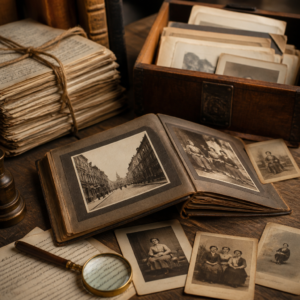
How AI can support archive teams without replacing review
AI image description tools can assist with first-pass cataloging by generating draft descriptions for scanned or photographed materials. This can save time during digitization projects, especially when collections include many similar items. For example, a local history archive may upload street photographs and receive basic summaries that mention buildings, vehicles, crowds, or signage. A museum may use AI to identify whether an image shows an interior gallery, a portrait, a handwritten note, or an event scene. These drafts can then be reviewed and refined by archivists, librarians, or collection managers who add the historical context that AI may not know.
Human review remains essential because archival work requires accuracy, sensitivity, and clear limits on what can be claimed. An AI tool may describe visible details well, but it should not be trusted to confirm identities, dates, or historical meaning without supporting evidence. In older materials, image quality, damage, faded text, and outdated visual styles can also affect results. A practical workflow is to use AI for observable content first, then add verified metadata from existing records, collection notes, or expert review. This approach helps teams move faster while keeping standards high for research use and public access.
Best practices for using AI image descriptions in archives
Archive teams can get better results by creating simple rules for how descriptions are generated, checked, and stored. It helps to decide in advance what each description should include, such as the main subject, setting, visible objects, readable text, and notable condition issues like tears or blur. Staff should also separate factual observations from uncertain details and avoid adding assumptions about identity, age, ethnicity, or intent unless those details are verified elsewhere. When possible, AI-generated descriptions should be saved alongside existing metadata rather than replacing it, so institutions keep both a searchable summary and a trusted catalog record. This makes image descriptions more useful for digital collections, educational projects, and long-term archive management.