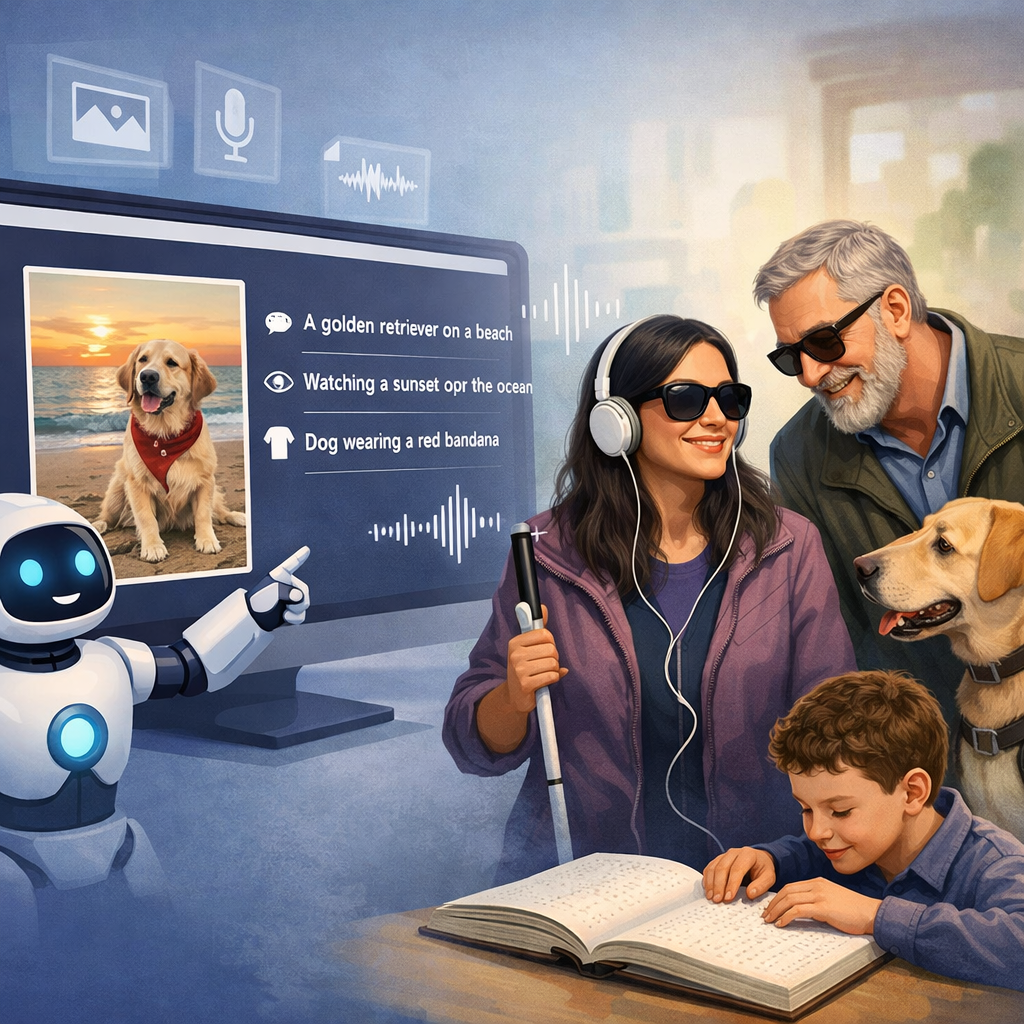
AI image descriptions can support learning in many educational settings. Schools, universities, online courses, and training platforms all use images to explain ideas, show examples, and keep lessons engaging. However, images are not always easy to understand for every learner. Some students may have visual impairments, some may study in a second language, and others may need extra context to connect visual content to the lesson topic. Clear image descriptions help bridge that gap by turning visual details into readable text. This makes charts, diagrams, classroom photos, historical images, science illustrations, and presentation slides easier to understand. For a website that offers AI-powered image description, education is an important topic because it shows how the tool can be used beyond general accessibility and content creation. It highlights a practical need: helping more people access visual information in a learning environment where clarity, speed, and consistency matter.
How image descriptions support learning
In education, an image is rarely just decoration. A picture in a textbook, a screenshot in a tutorial, or a diagram in a lesson often carries key information. When that information is only visible and not described, part of the lesson can be lost. AI image descriptions can help teachers and content creators provide a text version of what the image shows. This can improve understanding for students who use screen readers, but it can also benefit learners who prefer to read instructions, review lesson materials later, or study in a quiet environment without audio support. For example, a biology teacher may use an image of a plant cell, while a history course may include an old photograph from a major event. A clear description can identify the main elements, explain relationships between objects, and support the educational goal of the image. This turns a visual asset into a more usable learning resource for a wider audience.

AI-generated descriptions can also save time when educators work with large numbers of images. Creating descriptions manually for every slide, worksheet, and course page can be difficult, especially in busy teaching environments. An AI tool can generate a strong first draft that instructors can review and refine based on the lesson context. This is especially useful for online learning platforms, digital libraries, and course creators who publish content regularly. Fast descriptions can help teams keep pace with production while still improving access to visual content. In practice, the best results often come from combining AI speed with human review. A teacher or editor can make sure the description matches the learning level of the audience, uses the right subject terms, and focuses on the details that matter most for the lesson. This workflow supports both efficiency and quality in educational publishing.
Practical uses in classrooms and online courses
There are many ways AI image descriptions can be used across education. In classrooms, teachers can add descriptions to slide decks, handouts, and homework materials so that students have a fuller understanding of the content. In online courses, descriptions can improve lessons that include screenshots, infographics, maps, timelines, and product images. In technical education, they can help explain interface layouts, equipment photos, or step-by-step visual processes. In language learning, image descriptions can even become part of the lesson itself by giving students a simple text reference for vocabulary practice. Educational organizations can also use descriptions in knowledge bases, student portals, and support documentation. Because AI can process images quickly, it becomes easier to maintain a more accessible content library without slowing down course development. This is valuable for institutions that need to update materials often or publish across multiple departments with different content needs.
Another useful benefit is consistency. Educational websites often contain resources created by many different people over time. Without a clear process, some images may be described well, while others may be skipped or described in ways that are too vague. AI can help create a more consistent starting point for descriptions across a large site or course catalog. This matters for students because consistent language makes resources easier to follow. It also helps administrators and content teams build better standards for digital learning materials. When using AI for education, context remains important. A description for a young learner may need simpler wording than one for a university course. A math graph may require attention to labels, trends, and values, while a literature course image may need focus on setting, mood, or visible action. The purpose of the image should guide what details are included, so the description supports the learning objective rather than listing unrelated visual elements.
Best practices for educational image description
To get the most value from AI image descriptions in education, it helps to follow a few practical steps. First, use images that are clear and relevant to the lesson. Higher quality visuals usually lead to better automated descriptions. Second, review the generated result before publishing. AI can identify many visible elements, but it may not always know which detail is most important for the topic being taught. Third, adjust the wording for the audience. Students in primary school, higher education, and professional training often need different levels of detail and different vocabulary. Fourth, keep the description focused on what helps learning. If an image is meant to explain a process, the description should emphasize sequence and structure. If it supports a reading passage, it should connect to the theme or subject. Finally, treat image description as part of the overall learning experience, not as an afterthought. When visual content is described clearly, educational materials become more inclusive, more searchable, and easier to use across different devices and learning needs.